An Ethical Reorientation of Good Corporate Governance: The Integration of Human Dignity Values into Sustainability Accounting in the Context of Indonesia’s Climate Crisis
DOI:
https://doi.org/10.36985/5b95bq33Keywords:
Good Corporate Governance, Sustainability Accounting, Human Dignity, Climate Crisis, Hydrometeorological DisastersAbstract
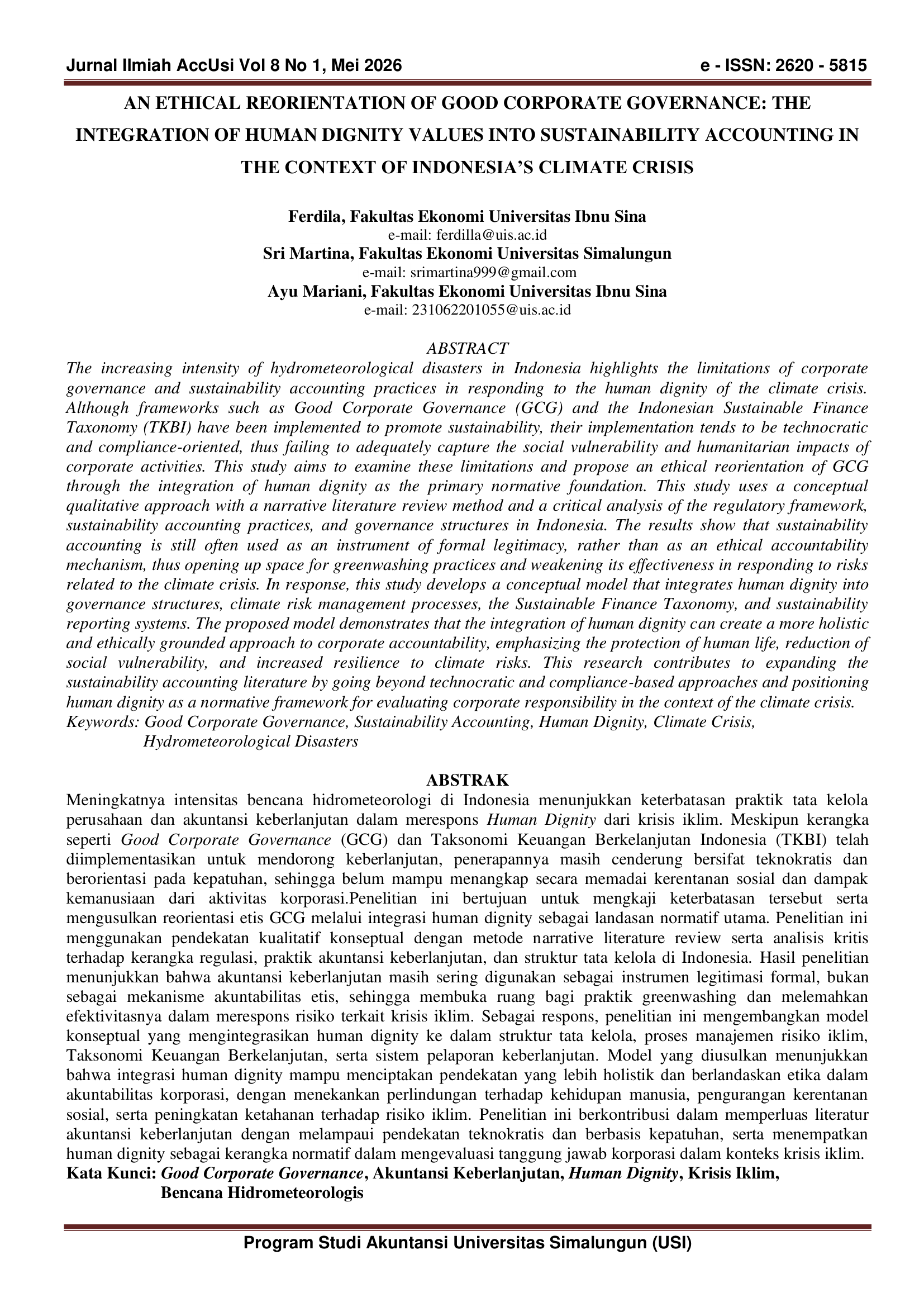
The increasing intensity of hydrometeorological disasters in Indonesia highlights the limitations of corporate governance and sustainability accounting practices in responding to the human dignity of the climate crisis. Although frameworks such as Good Corporate Governance (GCG) and the Indonesian Sustainable Finance Taxonomy (TKBI) have been implemented to promote sustainability, their implementation tends to be technocratic and compliance-oriented, thus failing to adequately capture the social vulnerability and humanitarian impacts of corporate activities. This study aims to examine these limitations and propose an ethical reorientation of GCG through the integration of human dignity as the primary normative foundation. This study uses a conceptual qualitative approach with a narrative literature review method and a critical analysis of the regulatory framework, sustainability accounting practices, and governance structures in Indonesia. The results show that sustainability accounting is still often used as an instrument of formal legitimacy, rather than as an ethical accountability mechanism, thus opening up space for greenwashing practices and weakening its effectiveness in responding to risks related to the climate crisis. In response, this study develops a conceptual model that integrates human dignity into governance structures, climate risk management processes, the Sustainable Finance Taxonomy, and sustainability reporting systems. The proposed model demonstrates that the integration of human dignity can create a more holistic and ethically grounded approach to corporate accountability, emphasizing the protection of human life, reduction of social vulnerability, and increased resilience to climate risks. This research contributes to expanding the sustainability accounting literature by going beyond technocratic and compliance-based approaches and positioning human dignity as a normative framework for evaluating corporate responsibility in the context of the climate crisis
Downloads
Downloads
Published
Issue
Section
License
Copyright (c) 2026 Ferdila Ferdila, Sri Martina, Ayu Mariani (Author)

This work is licensed under a Creative Commons Attribution 4.0 International License.