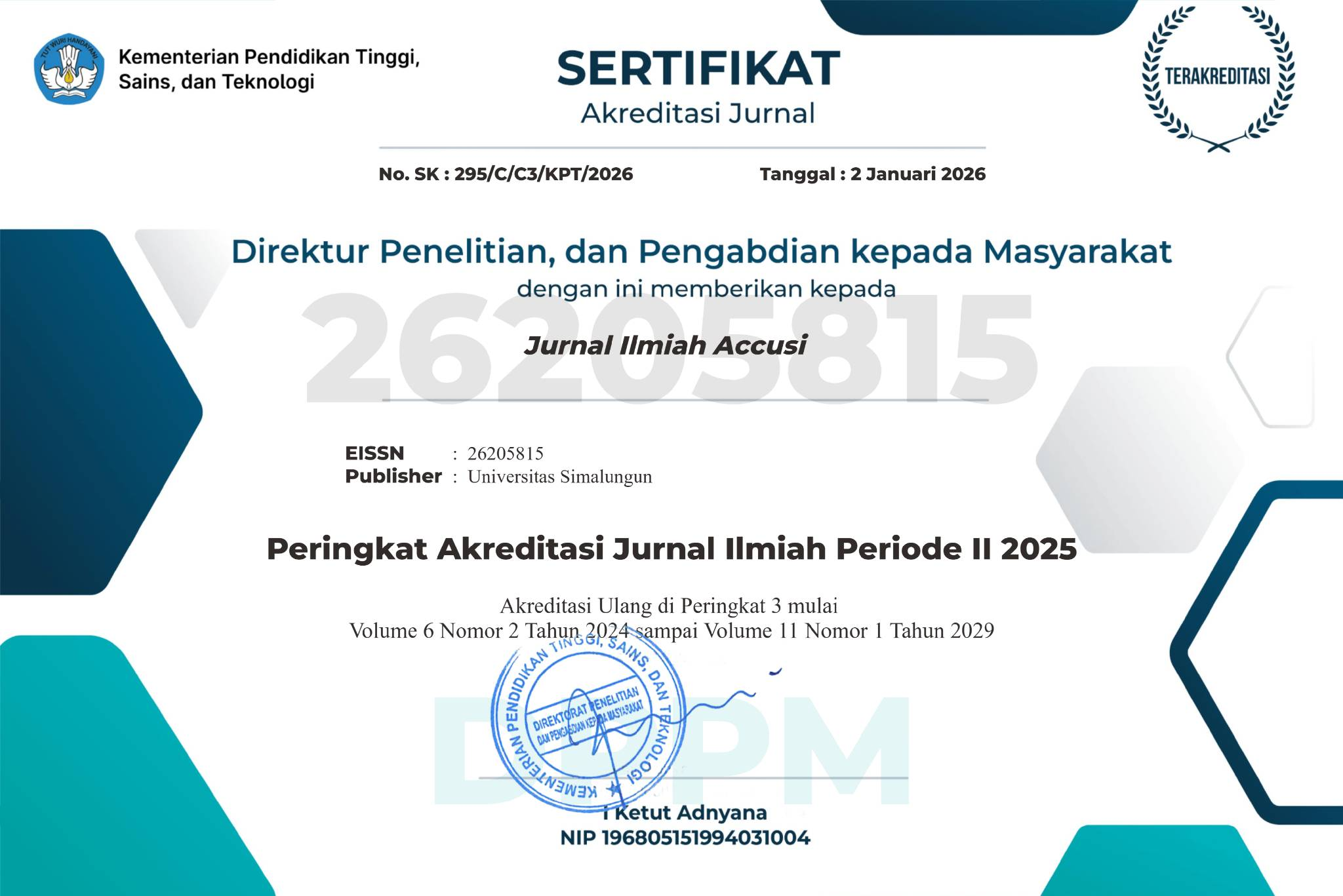
Enhancing Digital Payment Efficiency: The Role of QRIS Perceived Usefulness and Ease of Use
DOI:
https://doi.org/10.36985/ejmwmc72Keywords:
QRIS, Digital Payment Efficiency, Perceived Usefulness, Ease Of Use, Technology Acceptance ModelAbstract
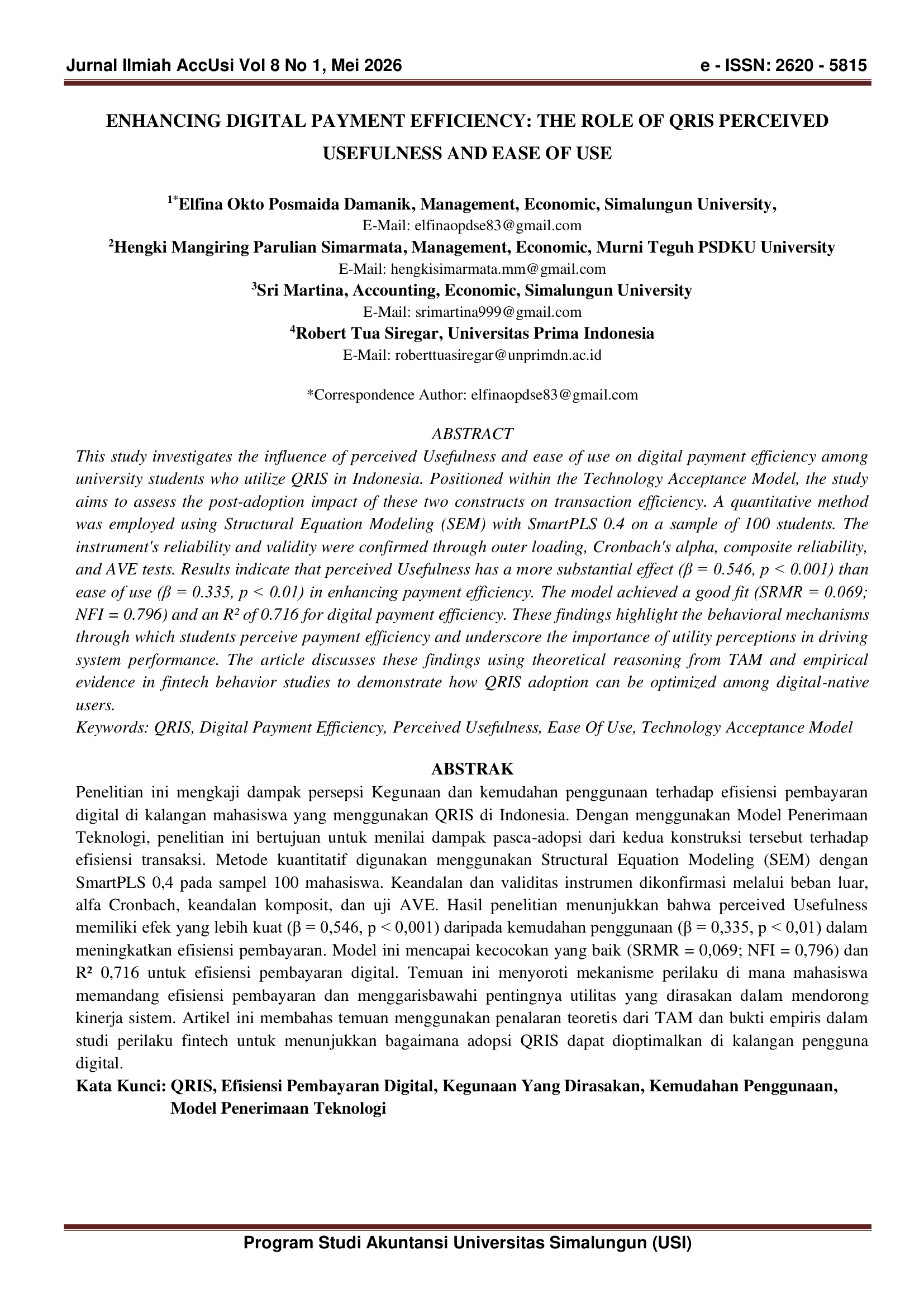
This study investigates the influence of perceived Usefulness and ease of use on digital payment efficiency among university students who utilize QRIS in Indonesia. Positioned within the Technology Acceptance Model, the study aims to assess the post-adoption impact of these two constructs on transaction efficiency. A quantitative method was employed using Structural Equation Modeling (SEM) with SmartPLS 0.4 on a sample of 100 students. The instrument's reliability and validity were confirmed through outer loading, Cronbach's alpha, composite reliability, and AVE tests. Results indicate that perceived Usefulness has a more substantial effect (β = 0.546, p < 0.001) than ease of use (β = 0.335, p < 0.01) in enhancing payment efficiency. The model achieved a good fit (SRMR = 0.069; NFI = 0.796) and an R² of 0.716 for digital payment efficiency. These findings highlight the behavioral mechanisms through which students perceive payment efficiency and underscore the importance of utility perceptions in driving system performance. The article discusses these findings using theoretical reasoning from TAM and empirical evidence in fintech behavior studies to demonstrate how QRIS adoption can be optimized among digital-native users
Downloads
Downloads
Published
Issue
Section
License
Copyright (c) 2026 Elfina Okto Posmaida Damanik, Hengki Mangiring Parulian Simarmata, Sri Martina, Robert Tua Siregar (Author)

This work is licensed under a Creative Commons Attribution 4.0 International License.